Warning: Critical Fire Weather Threat for WA & OR This Saturday
The National Weather Service in Pendleton has issued a Fire Weather Watch for much of Washington and Oregon this weekend.
Fire Weather Watch is in Effect Saturday Between 11 AM and 11 PM
Windy conditions will develop with overlapping low relative humidity values Saturday across the Columbia Basin and Eastern Wallowa County.
Expect high winds of 15 to 25 mph with gusts of up to 40 mph at times, with critical relative humidity. Any fire that develops will spread rapidly.
Outdoor burning is NOT recommended.
Read More: Oregon Man Faces Charges for Illegally Catching Protected Sharks

A Fire Weather Watch Is Issued When a Combination of Factors Are Present:
• Strong winds - will quickly spread flames
• Low relative humdity - dry air that dries out vegetation
• Dry fuels - grass, brush, or forests that are already dry enough to burn easily
• High temperatures - can make fires more intense

Stay Aware of Weather Updates
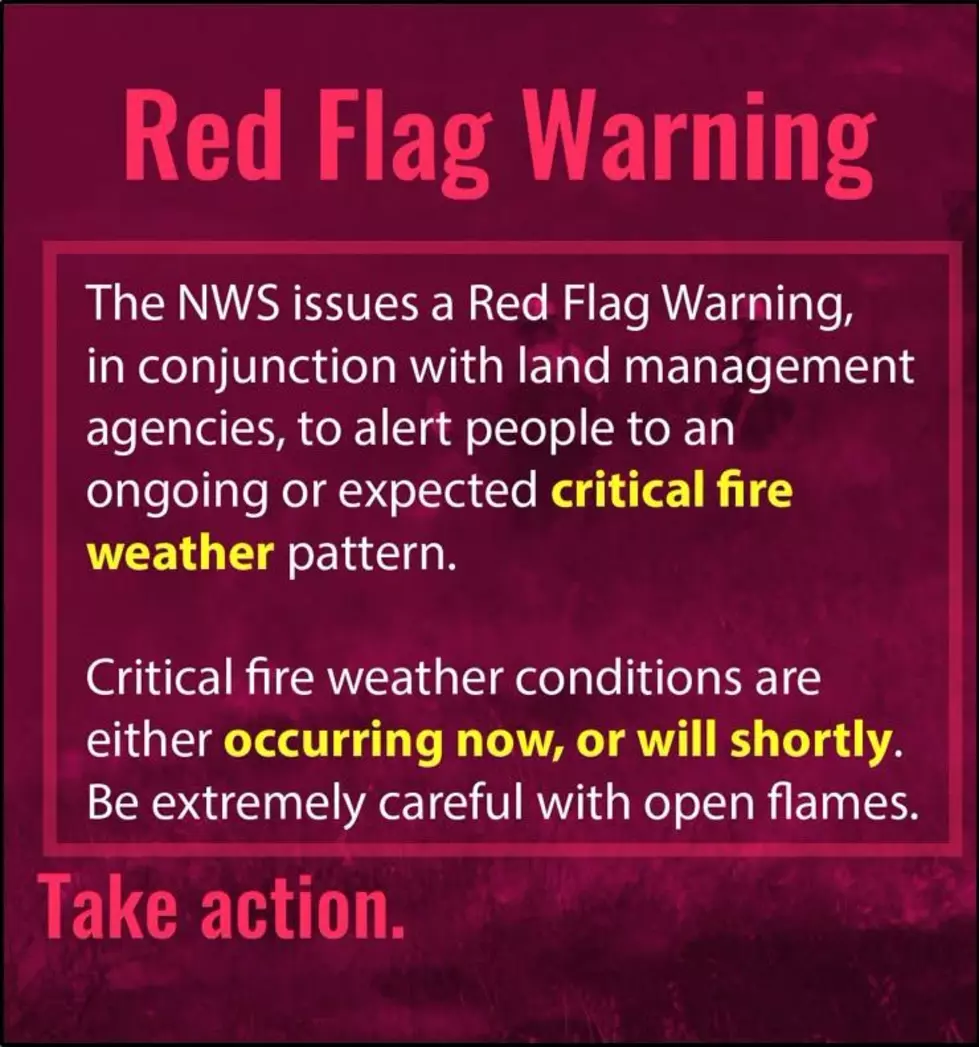
Should conditions become more threatening, the Fire Weather Watch may be upgraded to a Red Flag Warning, which means critical fire weather conditions are occurring or expected very soon.
LOOK: The most extreme temperatures in the history of every state
Gallery Credit: Anuradha Varanasi
LOOK: The most expensive weather and climate disasters in recent decades
Gallery Credit: KATELYN LEBOFF
More From 102.7 KORD